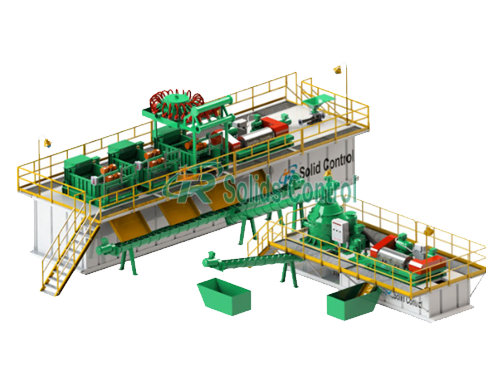
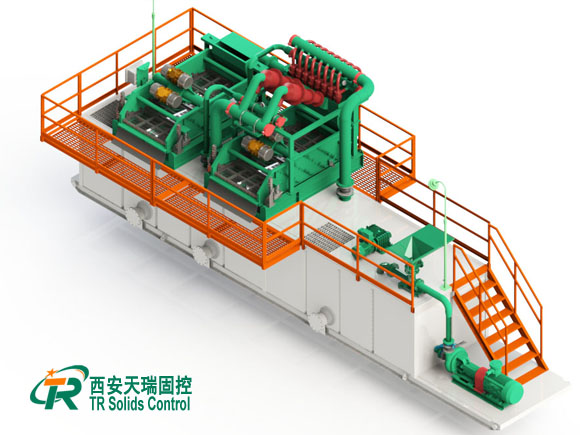
Tag Archives: Shaker Screen supplier
Reputable Shale Shaker Manufacturer: TR solids control
Choosing the right shale shaker manufacturer is critical for drilling operators—shaker quality, performance, and durability directly impact operational efficiency, safety, and cost-effectiveness. Reputable manufacturers combine engineering precision, industry experience, and client-centricity to meet onshore, offshore, and geothermal drilling demands. A trusted name in the field, TR Solids Control has built a strong track record of delivering robust, tailored solutions that enable seamless solids control workflows.
For drilling professionals, identifying a reliable shale shaker manufacturer means evaluating core capabilities that match operational needs. First, manufacturing expertise counts: quality-focused manufacturers prioritize durable materials and processes to withstand harsh drilling conditions—extreme temperatures, corrosive fluids, constant vibration. As a dedicated provider, TR Solids Control builds shakers with high-strength steel frames, premium vibration motors, and wear-resistant components, ensuring long-term, high-performance operation even under rigorous conditions.
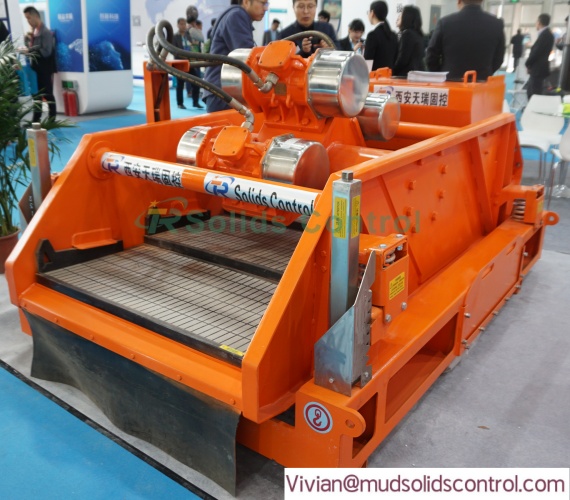
A key trait of a trustworthy shale shaker manufacturer is the ability to deliver customizable solutions. Drilling projects differ vastly in scale, location, and requirements—what works for large offshore rigs may not suit compact onshore sites or high-temperature geothermal wells. Reliable manufacturers recognize these gaps and collaborate with clients to tailor equipment accordingly. TR Solids Control excels here, offering flexible configurations (adjustable vibration frequencies, varied screen mesh sizes, modular designs) to adapt to unique drilling conditions, delivering high-capacity or space-saving units that integrate seamlessly into existing workflows.
Rigorous quality control is non-negotiable for a reliable shale shaker manufacturer. With drilling operations tolerating little equipment failure, strict testing and inspection are essential to meet industry standards and performance benchmarks. TR Solids Control enforces tight quality control across its manufacturing cycle—from raw material testing to final assembly and performance trials—ensuring every shaker performs as designed. This commitment minimizes downtime, cuts maintenance costs, and builds client confidence in equipment reliability.
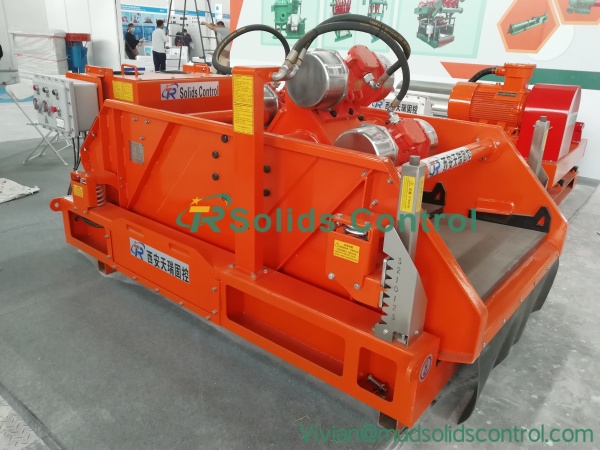
Beyond product excellence, a dependable shale shaker manufacturer provides comprehensive client support—from pre-purchase consultations and installation guidance to maintenance training and after-sales service—to maximize equipment value. TR Solids Control excels here: its team of industry experts collaborates closely with clients to assess needs, offer technical advice, and resolve issues promptly, ensuring smooth operations whether assisting with screen replacement, troubleshooting, or system optimization.
In the competitive drilling industry, partnering with a reliable shale shaker manufacturer is an investment in long-term operational success. TR Solids Control has established itself as a trustworthy provider by consistently delivering high-quality, customizable equipment supported by exceptional service. Its shale shakers efficiently perform core solids separation—removing cuttings from drilling fluid to preserve mud properties—and adapt seamlessly to the evolving demands of modern drilling projects.
For drilling professionals seeking a shale shaker manufacturer they can depend on, TR Solids Control offers the perfect balance of expertise, quality, and flexibility. By choosing a reliable shale shaker manufacturer like TR, operators can enhance operational efficiency, reduce risks, and focus on what matters most—delivering successful drilling projects.
M-I SWACO Shakers: Reliable Drilling Solids Control
M-I SWACO Shakers are a staple in the drilling industry, delivering reliable solids separation for onshore, offshore, and geothermal projects. As a vital part of mud management systems, they separate cuttings from drilling fluid, preserve fluid properties, and support operational efficiency and environmental compliance. Valued for adaptability across diverse drilling conditions, these shakers require compatible, high-performance complementary or replacement equipment—and TR Solids Control provides engineered solutions that meet industry standards and integrate seamlessly with M-I SWACO systems.
M-I SWACO Shakers deliver robust, consistent performance that underpins effective solids control workflows. Leveraging precision vibration technology and durable screens, they efficiently remove cuttings of all sizes—from fine sand to coarse rock—maintaining drilling mud viscosity and cleanliness for optimal operations. Whether as a primary separator or part of a multi-stage system, these shakers reduce downtime, cut operational costs, and minimize environmental impact, making them a globally popular choice for drilling projects.
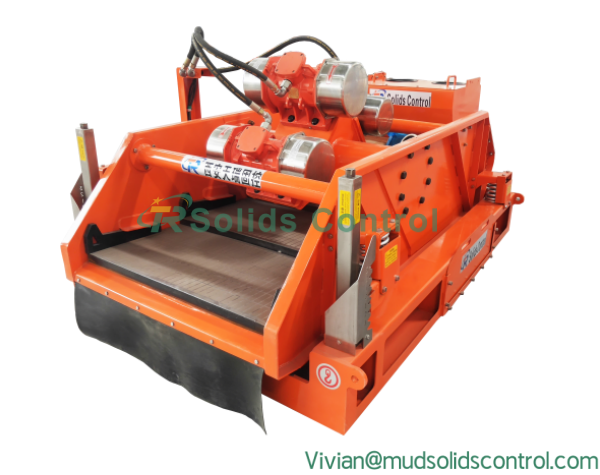
Compatibility is critical for operators upgrading solids control setups or replacing aging units—and TR Solids Control delivers fully compatible shale shakers for M-I SWACO systems. Every component—frame dimensions, vibration frequency, screen mounts, and fluid flow paths—is engineered to match M-I SWACO specifications, ensuring seamless integration without costly rig modifications. Whether expanding fleets or replacing worn units, TR’s solutions offer the same reliability and performance M-I SWACO Shakers are known for.
Beyond compatibility, TR Solids Control shale shakers embody the durability and adaptability central to quality solids control equipment. Built with high-strength materials for harsh drilling conditions, they feature premium vibration motors for stable performance and a range of screen options to handle diverse drilling fluids and cuttings sizes. Maintenance-friendly design—with accessible components and quick-release screen mechanisms—minimizes routine downtime, keeping drilling operations on track.
TR Solids Control compatibility focus goes beyond hardware: its team collaborates closely with clients to address operational needs—from high-volume offshore rigs to small-scale onshore projects using M-I SWACO Shakers. This client-centric approach tailors each compatible shale shaker to unique demands, such as corrosive fluids or extreme temperatures. Plus, comprehensive technical support for installation, calibration, and troubleshooting helps operators maximize integrated solids control system performance.
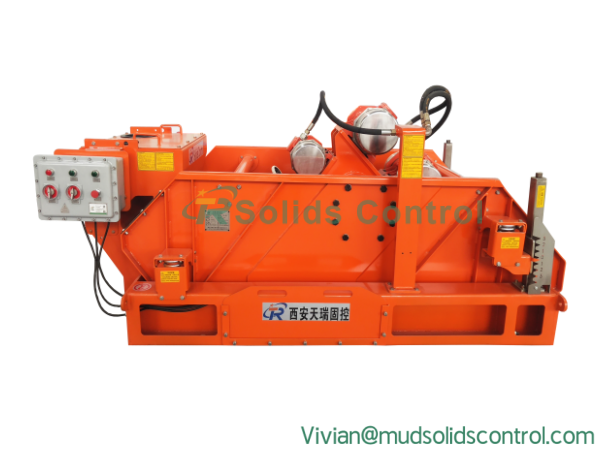
In an industry where efficiency and reliability are paramount, M-I SWACO Shakers are trusted solids control solutions. For operators looking to extend their system value or source reliable replacements, TR Solids Control delivers fully compatible shale shakers—precision-engineered, durable, and client-focused—to ensure seamless integration, consistent performance, and cost-effective, compliant drilling operations.
To sum up, M-I SWACO Shakers remain a cornerstone of effective solids control in drilling, and TR Solids Control has the capability to produce shale shakers that are completely with these systems. Whether you’re looking to expand your solids control fleet, replace outdated equipment, or optimize your existing setup, TR Solids Control compatible shale shakers offer a reliable, seamless solution that aligns with the performance and specifications of M-I SWACO Shakers.
Key Shale Shaker Performance Parameters and Their Impact on Drilling Efficiency
In oil and gas drilling, the shale shaker (first-stage solids control equipment) separates cuttings from circulating mud—its performance impacts overall drilling efficiency, stability, and cost. Understanding key parameters helps select the right model and optimize mud treatment for diverse conditions.China-based professional manufacturer TR Solids Control offers high-performance shale shakers meeting international standards for long-term reliability.
1. Main Shale Shaker Performance Parameters
The performance of a shale shaker depends on several critical parameters that define its separation efficiency and operational stability. These include:
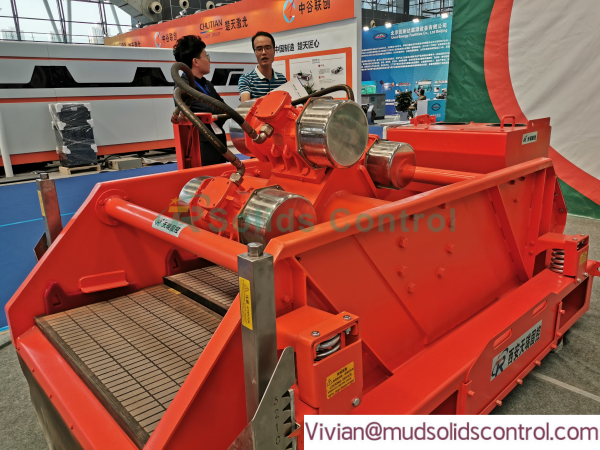
- (1) Vibration Strength (G-force):Vibration strength dictates solids separation efficiency from drilling fluid—oilfield shakers typically range 4.5–7.5 G, with higher G boosting discharge speed and drying. TR shale shakers have adjustable G-force motors for tuning to mud properties and formation conditions.
- (2) Screen Area:Effective screen area (2.0–3.5 m² per deck, model-dependent) determines shaker filtration capacity—larger area boosts mud throughput and cuts fluid loss.
- (3) Processing Capacity:Processing capacity (handling flow rate: 120–300 m³/h, model/mud density-dependent) is the shaker’s hourly mud processing volume. Key influences: screen size, mesh type, vibration amplitude, and mud viscosity.
- (4) Vibration Mode:Vibration motion type defines particle path on the screen: linear motion (common in oilfield shakers, strong conveying capacity) and balanced elliptical motion (reduces screen wear, retains fine solids).
- (5) Screen Size:Screen size (API mesh number) indicates separation fineness: coarse (API 40–60) for large particles, fine (API 120–200) for fine solids and mud polishing.
- (6) Power and Energy Consumption:Vibration motor power typically ranges 1.72–2.2 kW × 2, depending on shaker size/design. TR emphasizes energy-efficient designs, balancing low power use with strong vibration performance.
2. Typical Shale Shaker Performance Data (Example)
| Model | Motion Type | Screen Area (m²) | Capacity (m³/h) | G-force | Motor Power (kW) | Screen Qty |
| TRZS585 | Linear | 3.4 | 150 | 7.1 | 2×1.94 | 5 |
| TRZS584 | Linear | 2.7 | 130 | 7.1 | 2×1.5 | 4 |
| TRZS752 | Balanced Elliptical | 1.4 | 180 | 7.1 | 2×0.75 | 3 |
These parameters can be customized according to drilling fluid type, rig size, and regional standards.
3. Structural Design Features Affecting Performance
- High-strength welded steel frame – ensures vibration stability and long service life.
- Rubber vibration isolators – reduce noise and structural stress.
- Adjustable deck angle (–1° to +5°) – optimizes mud flow and drying rate.
- Quick-lock screen system – simplifies screen replacement and reduces downtime.
4. How to Optimize Shale Shaker Performance
- Adjust vibration intensity and deck angle based on mud conditions.
- Use proper screen mesh combinations (coarse + fine).
- Keep screens clean to maintain open area.
- Inspect motors and fasteners daily for stability.
- Replace worn screens promptly to prevent fluid bypass.
The shale shaker performance parameters—such as vibration strength, screen area, and capacity—play a decisive role in solids control efficiency and drilling cost reduction.By selecting properly configured equipment and maintaining correct operating parameters, drilling contractors can achieve cleaner mud, faster penetration rates, and lower maintenance costs.
Understanding Shale Shaker Screen Material and Its Impact on Drilling Efficiency
In oil and gas drilling, the shale shaker (first-stage solids control core) relies heavily on screen material—right selection boosts filtration accuracy, durability, and drilling efficiency. China-based TR Solids Control provides high-quality shaker screens with advanced materials for optimal separation and long service life in oilfield projects.
1. What Is Shale Shaker Screen Material?
Shale shaker screen material (metal mesh + supporting structure) filters drilling cuttings from circulating mud. Designed to withstand vibration, corrosion, and high flow in harsh conditions, it dictates filtration precision, wear/corrosion resistance, strength, flow capacity, and service life. High-quality screens maintain mud properties, reduce fluid loss, and enhance drilling performance.
2. Common Types of Shale Shaker Screen Materials
Different drilling environments require specific screen materials to achieve optimal separation. The main materials used in drilling shale shaker screens include:
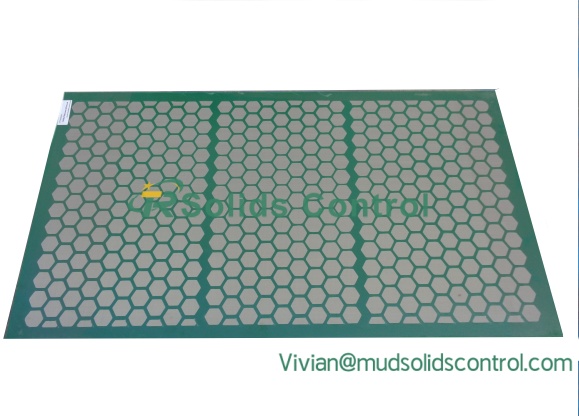
- Stainless Steel Wire Mesh:Widely used (SS304/316/316L), offering corrosion/tensile/wear resistance. Suitable for water/oil-based mud. TR Solids Control weaves fine stainless steel into multi-layer screens for precise separation and long service life.
- Composite Material Frame:Combines high-strength polymer + stainless steel mesh. Lightweight, rust-free, impact-resistant, easy to handle. Ideal for offshore/high-humidity environments; absorbs vibration and reduces screen damage.
- Carbon Steel/Galvanized Frame:Cost-effective with high rigidity for standard applications. Requires galvanizing/epoxy coating to prevent corrosion. Suitable for land drilling with moderate conditions.
- Polyurethane Screens (Optional):For coarse screening or abrasive formations. Offers excellent abrasion resistance and flexibility; ideal for high-solids mud.
3. Screen Layer Configuration
Shale shaker screens use 2–3 layers for balanced strength and separation: top (fine mesh, precision), middle (structural stability), bottom (backing mesh, protection/even vibration). TR Solids Control uses high-temperature bonding for strong interlayer adhesion and consistent screen performance.
4. How Material Quality Affects Drilling Performance
- Higher solids removal efficiency and cleaner drilling mud.
- Reduced fluid loss and lower mud cost.
- Extended screen life and fewer replacements.
- Improved drilling rate and equipment reliability.
Inferior materials may cause frequent screen damage, poor filtration, or fluid leakage, leading to increased downtime and maintenance costs.
5. TR Solids Control Shale Shaker Screen Features
- As a professional manufacturer, TR Solids Control provides shale shaker screens compatible with major brands such as Derrick®, Swaco®, and Brandt®.
- Stainless steel mesh (SS304 / SS316L) for corrosion resistance.
- Composite frame design for lightweight durability.
- CNC laser cutting for high precision and consistent quality.
- API RP13C compliance for mesh size and performance standards.
- Each screen is tested for tension strength, permeability, and wear resistance before delivery.
6. Conclusion
The shale shaker screen material plays a decisive role in solids control efficiency, maintenance cost, and overall drilling performance.By selecting high-quality stainless steel mesh and composite frame screens from TR Solids Control, drilling operators can achieve stable operation, cleaner drilling mud, and longer service life.Whether for land rigs or offshore platforms, TR provides reliable screen materials and customized solutions to meet your project needs.
A Complete Guide to Shale Shaker Screen Replacement for Drilling Operations
Efficient solids control begins with well-maintained shale shakers — the first line of defense in the drilling fluid process. Among all components, the shale shaker screen is the most critical and frequently replaced part. Timely shale shaker screen replacement ensures stable operation, clean drilling mud, and reduced wear on downstream equipment.
For drilling contractors, knowing when and how to replace screens can prevent costly downtime and improve the overall performance of the solids control system.
1.Regular screen replacement is essential because it:
- Maintains optimal screening efficiency and fluid recovery.
- Prevents contamination of drilling mud.
- Reduces equipment stress and vibration load.
- Lowers overall operation costs by avoiding damage to the shaker deck.
A damaged or clogged screen can quickly affect the performance of the entire mud system, making preventive replacement a necessary maintenance step.
2. When Should You Replace a Shale Shaker Screen?
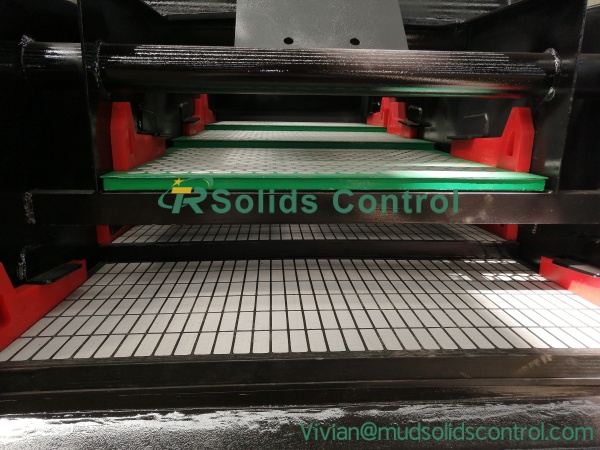
Recognizing the right time for shale shaker screen replacement can save both time and money. Common indicators include:
- Noticeable fluid loss or overflow on the shaker deck.
- Tears or holes visible in the screen mesh.
- Reduced separation performance, with more solids in the returned mud.
- Abnormal vibration or noise during operation.
- Excessive blinding or plugging that cannot be cleaned effectively.
Replacing the screen before complete failure helps maintain system efficiency and prevents unplanned downtime.
3. How to Replace a Shale Shaker Screen: Step-by-Step Process
- Stop the machine and disconnect power: Ensure all vibration motors are turned off and the system is depressurized.
- Remove worn screens: Release the tensioning assemblies or wedges carefully to avoid damage to the frame.
- Clean the shaker deck and frame: Wipe down the screen bed to remove mud and residue before installation.
- Install new screens: Place new screens securely and align them properly. Tighten clamps or wedges to achieve uniform tension.
- Check seals and gaskets: Ensure all sealing surfaces are intact to prevent mud leakage.
- Restart and test: Gradually restart the shaker and inspect for even vibration and no fluid bypassing.
Following the correct procedure ensures optimal performance and prolongs screen life.
4. Maintenance Tips for Extending Screen Life
- Clean screens regularly using soft brushes or water (avoid high pressure).
- Avoid dropping heavy tools or cuttings onto the screen surface.
- Maintain proper vibration settings and deck angle.
- Store spare screens flat and dry to prevent corrosion or warping.
- Inspect screens daily and replace them at the first sign of damage.
Following these tips ensures consistent mud separation efficiency and longer equipment lifespan.
5. Conclusion
Timely shale shaker screen replacement is essential for maintaining drilling efficiency and protecting your solids control system. Using high-quality screens, following the correct replacement process, and working with a trusted supplier will help reduce downtime and extend equipment life.
As a professional manufacturer, TR Solids Control offers reliable shaker screens and full after-sales support — helping oilfield operators achieve efficient, clean, and sustainable drilling performance worldwide.
Professional Solids Control Equipment Maintenance Service for Stable Drilling Operations
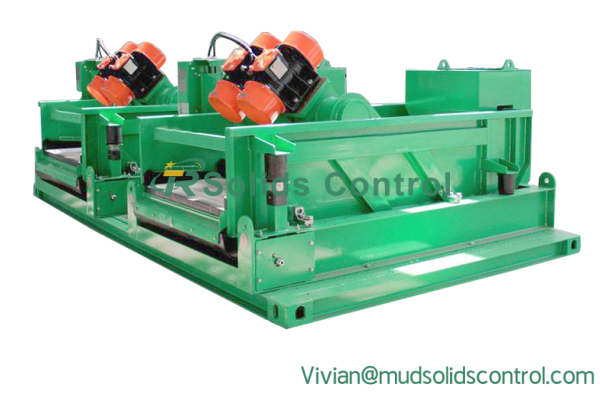
In modern drilling projects, the reliability of solids control equipment directly affects the stability and efficiency of the entire mud circulation system. Regular inspection and maintenance are essential to prevent equipment failure and ensure continuous operation. A professional solids control equipment maintenance service helps companies improve safety, reduce costs, and extend the working life of vital components such as shale shakers, desanders, desilters, and centrifuges.
By adopting systematic maintenance practices, operators can achieve both high performance and environmental compliance in drilling operations.
1. Why Maintenance Matters for Solids Control Equipment
Solids control systems are exposed to harsh drilling conditions — abrasive fluids, high vibration, and continuous operation. Without timely maintenance and service, performance declines, leading to:
- Reduced mud quality and inefficient separation.
- Increased mechanical wear and higher repair costs.
- Unplanned downtime affecting drilling schedules.
A consistent equipment maintenance service ensures smooth operation, keeps mud systems stable, and prevents costly equipment failures.
2. Key Components Requiring Regular Maintenance
Each unit in the solids control line plays a critical role, and every component needs attention. Professional solids control equipment maintenance focuses on:
- Shale Shakers: Check vibration motors, screen tensioning, and sealing components.
- Desanders & Desilters: Inspect cyclone liners, cones, and valves for wear or blockage.
- Centrifuges: Service bearings, conveyor parts, and differential gears for smooth rotation.
- Mud Agitators: Replace worn impellers and ensure motor alignment.
- Mud Pumps & Screw Pumps: Examine seals, pistons, and liners to prevent leakage.
Regular inspection and replacement of vulnerable parts help maintain system efficiency and safety.
3. Benefits of Professional Maintenance Services
Partnering with a qualified solids control equipment maintenance provider brings multiple benefits:
- Stable Operation: Reduce downtime through preventive maintenance.
- Cost Control: Extend equipment life and minimize emergency repair costs.
- Operational Safety: Avoid sudden failures that could affect on-site personnel.
- Higher Efficiency: Maintain clean drilling fluid and reduce waste.
- Sustainability: Support environmentally responsible drilling practices.
Well-maintained solids control systems contribute to safer, cleaner, and more reliable oilfield operations.
4. How to Plan a Maintenance Schedule
To keep solids control systems in good working condition, operators should establish a clear maintenance schedule, including:
- Daily: Visual checks of vibration, oil levels, and screen conditions.
- Weekly: Cleaning of cyclones, mud tanks, and suction lines.
- Monthly: Comprehensive inspection of electrical systems and motor bearings.
- Quarterly: Replacement of seals, screens, and worn components.
- Annually: Full equipment overhaul and system recalibration.
Following a structured schedule reduces long-term costs and ensures consistent solids control performance.
A professional solids control equipment maintenance service is essential for keeping drilling operations efficient, safe, and environmentally responsible. Regular maintenance helps prevent unexpected failures, reduces downtime, and extends equipment lifespan.
As a trusted manufacturer and service provider, TR Solids Control delivers comprehensive maintenance solutions and reliable technical support to global oilfield clients — ensuring every drilling system performs at its best.
BEM Shale Shakers for drilling waster management
Based on the oilfield test sand compared with other shaker types,balanced elliptical motion shale shakers can consistently provide gentle rolling motion,better solids removal and fluid circulation,less screen wear.
Balanced Elliptical Motion Shale Shakers is designed for various solid conditions. With balanced elliptical shaking track, such shale shake is most advanced with features of quick disposal, high capacity, good screening efficiency with prolonged screen life, and easy to install and maintain.
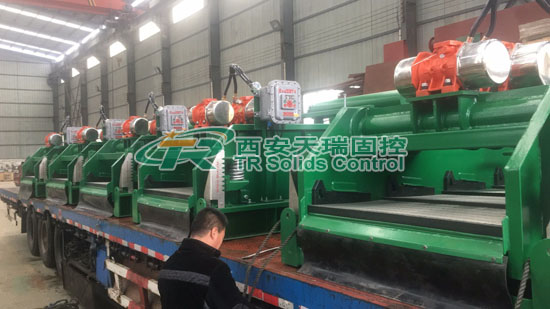
Balanced Elliptical Motion Shale Shakers,Drilling Mud Shale Shakers
Balanced Elliptical Motion Shale Shakers for drilling waster managment
Balanced Elliptical motion Shakers cuttings discharge more convenient, the capacity of balanced elliptical shale shakers will increase by 25%-30% comparing with the linear motion shale shaker in the same specification which has been tested many times.
The balanced elliptical movement of balanced elliptical shale shakers strengthens the dehydration of shaker screen, and it makes the drilling cuttings drier, which reduce the drilling cost.
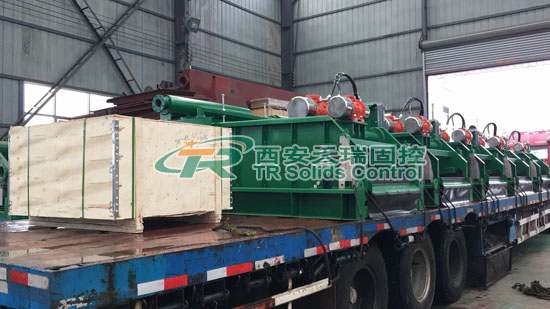
Balanced Elliptical Motion Shaker supplier,drilling fluid shale shakers
We are an exporter of Balanced Elliptical Motion Shale Shakers.Our factory approval the API,Elliptical Motion Shale Shaker have the API certification.TR solids control is the designed,selling,production,service and delivery of Chinese drilling fluid Elliptical Motion Shale Shakers manufacturers and balanced Elliptical Motion Shale Shakers supplier.We will provide the high quality drilling fluid Shale Shakers and best service.Your best mud Balanced Elliptical motion shale shaker start from TR solids control.
Contact Us:TR Solids Control
Sales office:No.10 West of North 2nd Ring Road Xi’an City.
 Manufacture: No.60 Caotang Industry Zone Huxian County Xi’an City.
 Tel:+86-29-86332919
 Call:13186019379
 E-mail:sales@trsolidscontrol.com
Web:www.chinasolidscontrol.com