


Shale Shaker: The Core of the Drilling Fluid Solids Control
The drilling fluid solids control process is a staged purification system. Its goal is to remove solids of varying sizes through coordinated equipment, restoring fluid viscosity and density for recycling thereby cutting costs and environmental impact. Arranged by particle size, the process begins with the shale shaker as the “first gate” of solids control.
- Front End – Shale Shaker: Fluid returning from downhole, carrying solids >74 µm, enters the shaker. High‑frequency vibration separates and discharges large cuttings, removing over 80% of solids and greatly reducing the load on downstream equipment.
- Mid Stage – Desander + Desilter: Fluid then flows to the desander (removing 74–44 µm sand) and desilter (removing 44–20 µm clay).
- Back End – Centrifuge: Finally, the centrifuge removes ultra fine solids below 20 µm, producing clean fluid that returns to the well.
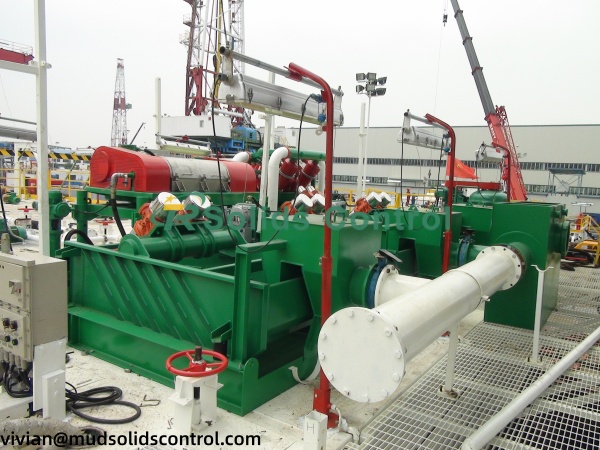
In the drilling fluid solids control process, the shale shaker is more than just a “cuttings separator” its performance directly impacts overall efficiency, equipment wear, and fluid reuse. Its core role, and why it is the front end key, is threefold:
- Reduces Downstream Load & Wear: If large cuttings bypass the shaker, they enter desanders and desilters, wearing impellers, liners, and risking blockages—increasing failures and shortening equipment life.
- Ensures Process Efficiency: A shaker with mismatched capacity can cause fluid overflow or delayed treatment, slowing the entire solids control process.
- Boosts Overall Fluid Recycling: Incomplete separation leaves solids that degrade fluid quality, making full performance restoration difficult even after deep cleaning. An efficient shaker enables staged, thorough purification, significantly raising total recycling rates.
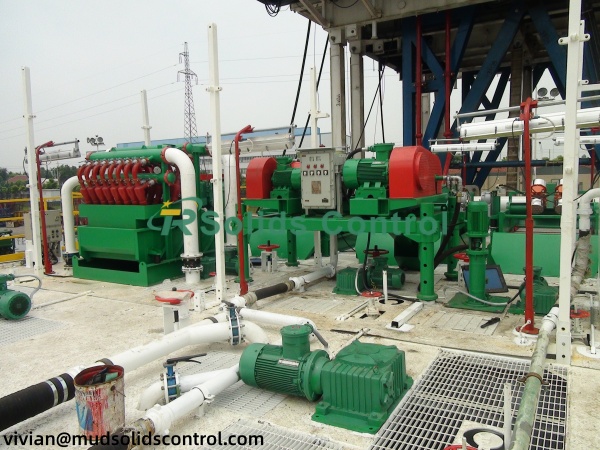
To meet the hierarchical and on site demands of the drilling fluid solids control process, TR solids control has optimized its shale shaker for efficient front end purification and seamless downstream integration. Its core design features align with actual process requirements:
- Multi Level Throughput: Screens in various sizes offer capacities from tens to hundreds of cubic meters per hour, matching drilling flow and system needs. Adjustable excitation force and deck angle allow real time tuning to fluid viscosity and solids, preventing overflow or delays.
- Dual Mode Vibration: Switchable linear and elliptical trajectories: linear for rapid separation in low viscosity, high volume fluid; elliptical for thorough cleaning of high viscosity, high solids mud, minimizing residue carry over.
- System Integrated Design: The shaker is developed alongside TR desanders, desilters, and centrifuges, with outlet size and flow rate precisely matched to downstream inlets for plug and play operation.
- Quick Change Screens: A snap release screen clamp enables one person, tool free replacement in minutes. Durable polyurethane or stainless steel screens extend service life and minimize process interruptions.
Drawing on deep process knowledge and years of manufacturing experience, TR Solids Control has developed shale shakers that precisely meet operational needs. We also provide end to end process optimization solutions from initial purification to deep treatment ensuring full‑system coordination and efficiency.
Moving forward, TR will continue to be guided by field needs, constantly improving our shakers and complete solids control line to deliver reliable support for efficient, stable fluid treatment operations and help drilling projects achieve cost savings, productivity gains, and greener performance.


Leave a Reply