


Shale Shaker Applications in Oil and Gas Industry
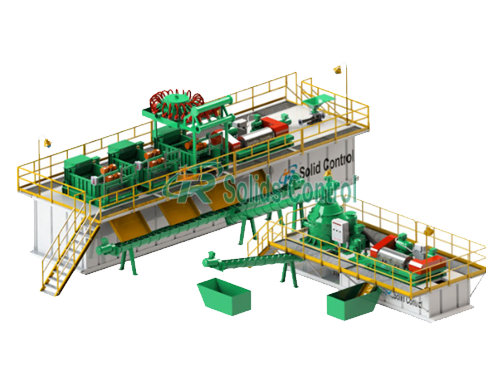
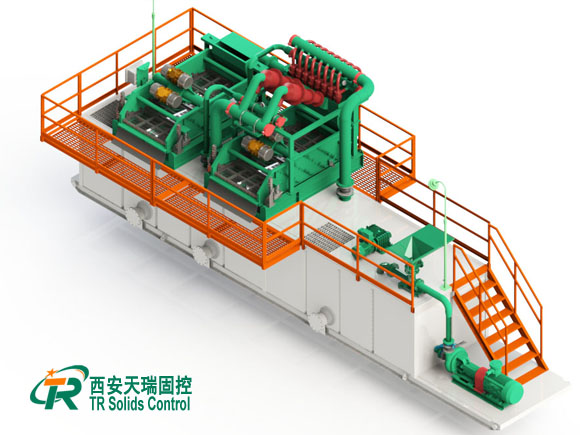
Shale shakers are key components of drilling solids control systems. As drilling equipment, they are mainly used for solid-liquid separation of drilling mud in oil and gas drilling processes—separating cuttings and recovering reusable drilling fluid to ensure continuous, stable drilling operations. In modern oil and gas drilling engineering, proper use of shale shakers has become a crucial way to improve the operational efficiency of solids control systems.
In oil and gas drilling operations, drilling mud carries a large amount of cuttings back to the surface. As a primary solid control device, the shale shaker mainly performs the following tasks:
- – Separates large solid particles from the drilling fluid
- – Reduces the workload of subsequent desanders and desilters
- – Minimizes mud loss and improves recycling efficiency
- – Helps stabilize mud properties and protect drilling equipment
With a smoothly operating shale shaker system, the mud system at an oil and gas drilling site can be kept clean and balanced.
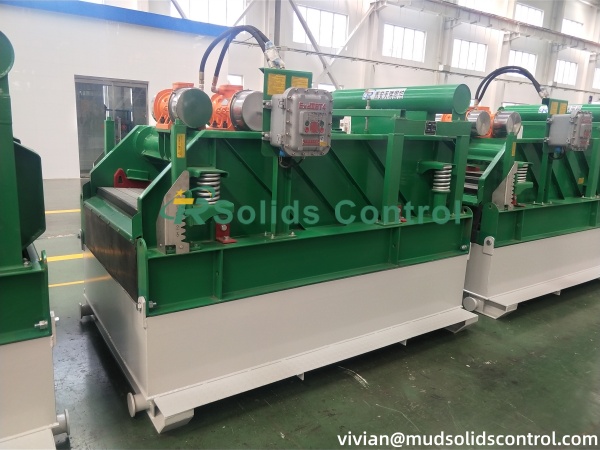
The application of shale shakers in the oil and gas industry covers multiple operational scenarios:
- Onshore oil and gas drilling – Shale shakers are used in conventional oil and gas wells, shale gas wells, and other drilling operations, adapting to drilling fluids of different densities and flow rates.
- Offshore drilling platforms – Shale shakers feature a compact structure and stable operation, making them suitable for offshore drilling environments with limited space.
- Unconventional energy development – During shale oil and shale gas drilling, there is a higher requirement for fine particle separation, and the shaker screen configurations are more flexible.
In practical oil and gas industry applications, the operational performance of a Shale Shaker is affected by various factors:
- – Vibration mode (linear motion, elliptical motion)
- – Selection of screen mesh size and material
- – Configuration of the vibrating motor’s excitation force
- – Drilling mud flow rate and viscosity
- – Equipment installation angle and maintenance condition
Proper selection and standardized operation help to maximize the value of the shaker in oil and gas drilling applications.
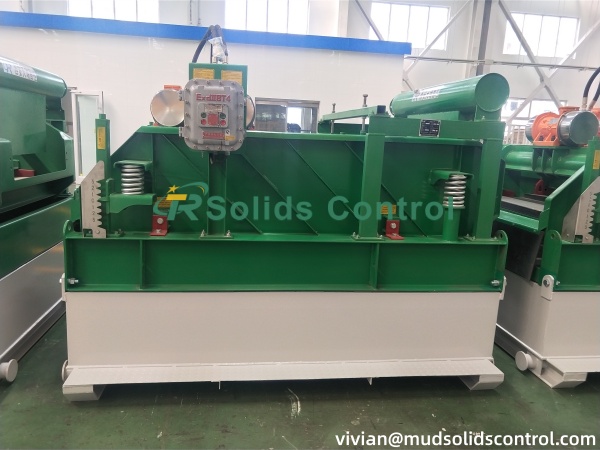
As a professional solid control equipment supplier in China, TR Solid Control has long provided shale shakers and supporting solutions for oil and gas drilling projects. TR’s Shale Shaker products focus on:
- – Stable vibration system structure
- – Compatibility with multiple screen specifications
- – Convenient screen replacement methods
- – Operation adaptability for different working conditions
TR Solid Control has been widely used in oil and gas drilling and mud treatment systems, helping customers achieve stable and efficient solid control operations.
With the continuous development of oil and gas drilling technology, the application of Shale Shakers in the oil and gas industry is also showing new trends:
- – Shaker designs with higher processing capacity
- – More wear-resistant screens with longer service life
- – Equipment solutions that focus more on energy saving and environmental protection
- – Collaborative application with automated solids control systems
These trends are driving the continuous optimization and upgrading of shaker applications in the oil and gas industry.
Overall, the application of shale shakers in the oil and gas industry is of great significance for drilling mud treatment and the operation of solids control systems. By reasonably selecting shaker equipment and applying it according to actual working conditions, oil and gas drilling projects can achieve more stable mud circulation and more efficient solids control management. TR solids control equipment will continue to provide reliable shale shakers and supporting solutions for the oil and gas industry.


Leave a Reply